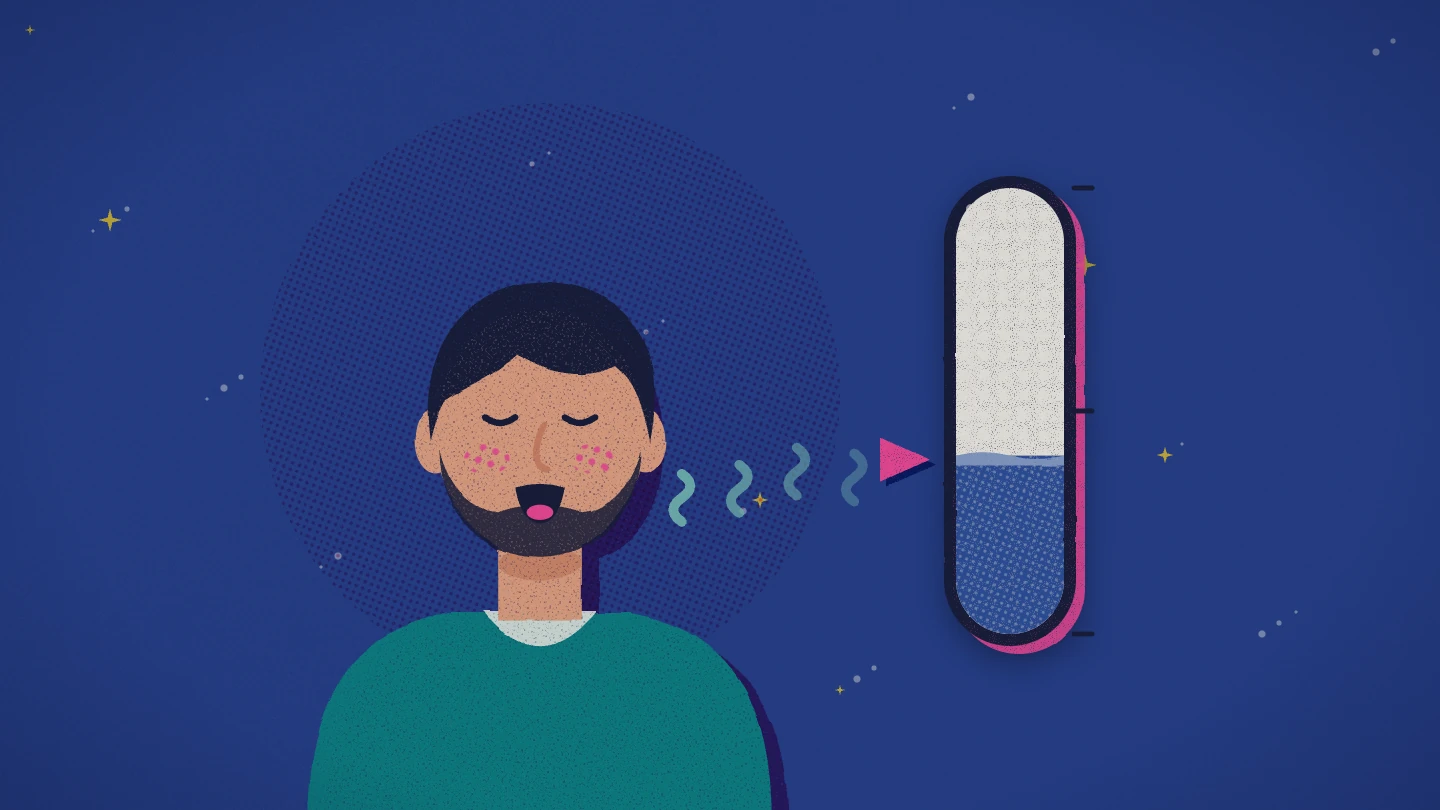
In the video I showed a small technique I use in any stressful moment: at work, before an interview, in a meeting, before a talk, or in the middle of an argument with your partner. It takes a few seconds, and nobody around you will notice you're doing anything.
How to do it
- Look ahead into empty space, about half a metre in front of you, not at anything in particular. Let your gaze rest.
- Take a quick breath in, in two parts: one inhale, then a second, shorter one on top that fills your chest all the way.
- Then let the breath out through your mouth, slowly, with a soft sound, as if you'd just had a cold drink after a hot, tiring day.
- Do it twice in a row, during the moment itself or just before it.
That's it, that's the whole technique. You don't need to close your eyes or sit in a special position, which is why you can do it in the middle of a meeting.
Why the empty space
When you're stressed, your attention is all outside you: the noise, the people, what they'll say, what you have to answer. When you rest your eyes on the space in front of you and breathe like this, your focus comes back from your surroundings to you. Afterwards I feel a kind of space inside, my head is clear and things feel under control.
This comes from yoga. Yoga has a Sanskrit word for space, or ether: akasha, one of the five elements. I like the idea of giving yourself a little space in a moment that's full of noise.
What the research says
A double inhale followed by a long exhale looks a lot like something your body does by itself: the sigh. We sigh several times an hour without noticing. Researchers think sighs help reopen tiny air sacs in the lungs that have partly collapsed, and sighing has been linked to a sense of relief and to resetting the rhythm of your breathing.
In 2023 a Stanford team published a study in Cell Reports Medicine with 108 people. Each of them practised for five minutes a day for a month, using one of four methods: mindfulness meditation or one of three breathing exercises. One of those exercises is called cyclic sighing, and it's very close to what I show in the video: an inhale, a second inhale on top to fill the lungs, then a long, full exhale. In the study, people took both inhales through the nose and breathed out through the mouth.
Every group ended up with less anxiety and fewer negative feelings, the meditation group included. The cyclic sighing group, though, had a bigger rise in positive mood than the meditation group, and their breathing rate dropped more as well.
To be honest with you: it's a small study, and those people practised five minutes every day for a month, not two breaths before a meeting. So I can't promise you the same result in a few seconds. What I can say is that the double inhale and the long exhale have some science behind them. For the rest, try it and see what it does for you.
If you want more
In the moment itself, twice in a row is enough. If you'd like to practise, sit for five minutes a day and repeat the same breath slowly, the way they did in the study. The more used to it you get, the easier it is to remember when the pressure is on.
A note: keep the breath comfortable and don't force it. If you feel dizzy or light-headed, stop and breathe normally. If you have asthma, a heart or lung condition, or panic attacks, talk to your doctor before starting any breathing exercise. And if stress or worry has been taking up most of your day for weeks, talk to a doctor or a mental health professional. This technique isn't a substitute for that help.